

Polisario Front Offers Direct Talks With Morocco Under UN Supervision
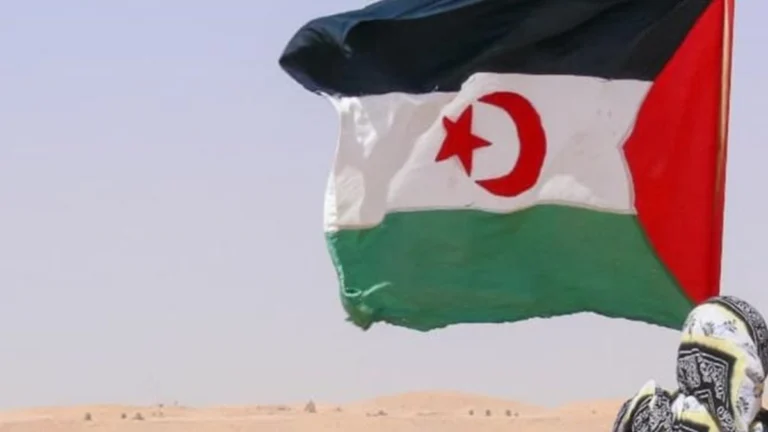
A woman waves a Polisario Front flag. X/ @TSAlgerie
October 21, 2025 Hour: 8:50 am
Sahrawi independence movement calls for a ‘mutually acceptable’ solution to the Western Sahara conflict.
On Monday, Polisario Front leader Brahim Ghali sent a letter to United Nations Secretary-General Antonio Guterres expressing his willingness to “engage in direct and serious negotiations with the Kingdom of Morocco” under the auspices of the United Nations.
RELATED:
Cuba Reaffirms Support for Western Sahara’s Self-Determination at UN
The letter includes a Polisario proposal to hold a referendum supervised by the United Nations and the African Union and to convey the Sahrawi State’s readiness to negotiate with Morocco “the establishment of strategic and mutually beneficial relations between the two countries.”
The letter was presented to the UN secretary-general under the title “Proposal of the Polisario Front for a Mutually Acceptable Political Solution Providing for the Self-Determination of the People of Western Sahara and Restoring Regional Peace and Stability.”
The Polisario offered “good-faith, unconditional negotiations” based on “the spirit and content of the expanded proposal, with a view to achieving a peaceful and lasting solution that ensures the self-determination of the Sahrawi people.”
The Sahrawi independence movement described the resolution of the conflict as “urgent” and called for moving away from “solutions based on the status quo and unilaterally imposed,” urging all sides to “have the political courage and foresight needed to work together.”
The Polisario Front said its proposal responds to United Nations Security Council (UNSC) resolutions that stress the importance of both parties “broadening their positions” in order to promote a solution.
On Oct. 31, the UNSC is scheduled to discuss the extension of the United Nations Mission for the Referendum in Western Sahara (MINURSO).
Peace negotiations remain stalled despite ongoing contacts by the UN secretary-general’s personal envoy for Western Sahara, Staffan de Mistura, who last visited the Sahrawi refugee camps in Algeria’s Tindouf region in September.
Morocco proposes granting the territory autonomy under its sovereignty. In 2020, however, the Polisario Front declared the 1991 ceasefire with Rabat void, reiterating its demand for self-determination through a referendum.
A Stalemate Between Sovereignty and Independence
Western Sahara, a former Spanish colony, is considered a non-self-governing territory in the process of decolonization. Morocco currently controls about 80 percent of the area, but the United Nations has not recognized Moroccan sovereignty over it.
The conflict between Morocco and the Polisario Front centers on the disputed territory of Western Sahara, located on Africa’s northwest coast. After Spain withdrew in 1975, both Morocco and Mauritania claimed the territory.
The indigenous Sahrawi people, represented by the Polisario Front—a liberation movement founded in 1973—sought independence rather than integration with either neighboring country.
Morocco, however, asserted historical sovereignty over the territory, while the Polisario Front, backed by Algeria, declared the Sahrawi Arab Democratic Republic (SADR) in 1976, claiming full independence.
A protracted war between Morocco and the Polisario Front lasted from 1975 to 1991. During that period, Morocco gained control of about two-thirds of Western Sahara and built a heavily fortified sand wall, known as the “Moroccan Berm,” to secure its hold on the region.
The Polisario Front operated mainly from refugee camps in Tindouf, Algeria, conducting guerrilla warfare against Moroccan forces. The United Nations brokered a ceasefire in 1991 and established MINURSO to organize a self-determination referendum. However, disputes over voter eligibility and political disagreements have indefinitely delayed the vote.
The conflict remains unresolved. Morocco considers Western Sahara an integral part of its national territory and proposes limited autonomy under Moroccan sovereignty, while the Polisario Front continues to demand full independence for the Sahrawi people.
Sporadic clashes have resumed since 2020, and diplomatic tensions persist among Morocco, Algeria, and other regional actors. Despite international efforts, including UN-led negotiations, the status of Western Sahara remains one of Africa’s longest-running and most complex territorial disputes.
teleSUR/ JF
Sources: EFE – MINURSO – BBC